Erosion Control Materials: Stone, Fabric, and Fill for a Sloped Yard
· 7 min read
A slope that sheds water faster than the ground can absorb it will keep losing soil until you give the water somewhere to go and the ground something to hold onto. Around here that is most yards with any grade to them: heavy clay, wet springs, and a freeze-thaw cycle that loosens a bank a little more every winter. The fix is not one product. It is a short stack of materials, each doing one job, ordered in the right amount. This guide covers the three that do most of the work, stone, fabric, and fill, and how to figure out how much of each a sloped yard actually takes.
Read the slope before you order anything
Start by watching where the water goes in a hard rain. A gentle, evenly graded bank sheds water in a sheet and usually needs nothing more than fabric and a good stand of roots. A steeper slope, or one where runoff has already carved a channel, concentrates water into a fast-moving stream that will keep cutting until you slow it down or armor the path. Those two problems call for different materials, so it is worth being honest about which one you have before you load a trailer. If runoff is coming off a roof, a driveway, or a neighbor's higher lot, that upstream volume matters more than the slope itself.
Fill: rebuild the grade first
You cannot armor a slope that is still the wrong shape. Where erosion has scoured out gullies or undercut the toe of a bank, the first material in is usually fill dirt to rebuild the grade and take the sharp edge off the pitch. Fill is subsoil, not topsoil, so it is the right, economical choice for bulk volume where nothing needs to grow yet. Build it up in compacted lifts rather than one loose dump so it does not settle and slump the first time it rains. Cap the rebuilt grade with a few inches of screened topsoil anywhere you plan to seed or plant, because roots are the long-term erosion control and they need something to live in. For the difference between fill and topsoil in more detail, our mulch, topsoil, and base materials guide breaks it down.
Fabric: hold the surface while roots take over
Bare, reshaped soil is at its most vulnerable in the weeks before a cover crop or plantings knit it together. Fabric buys that time.
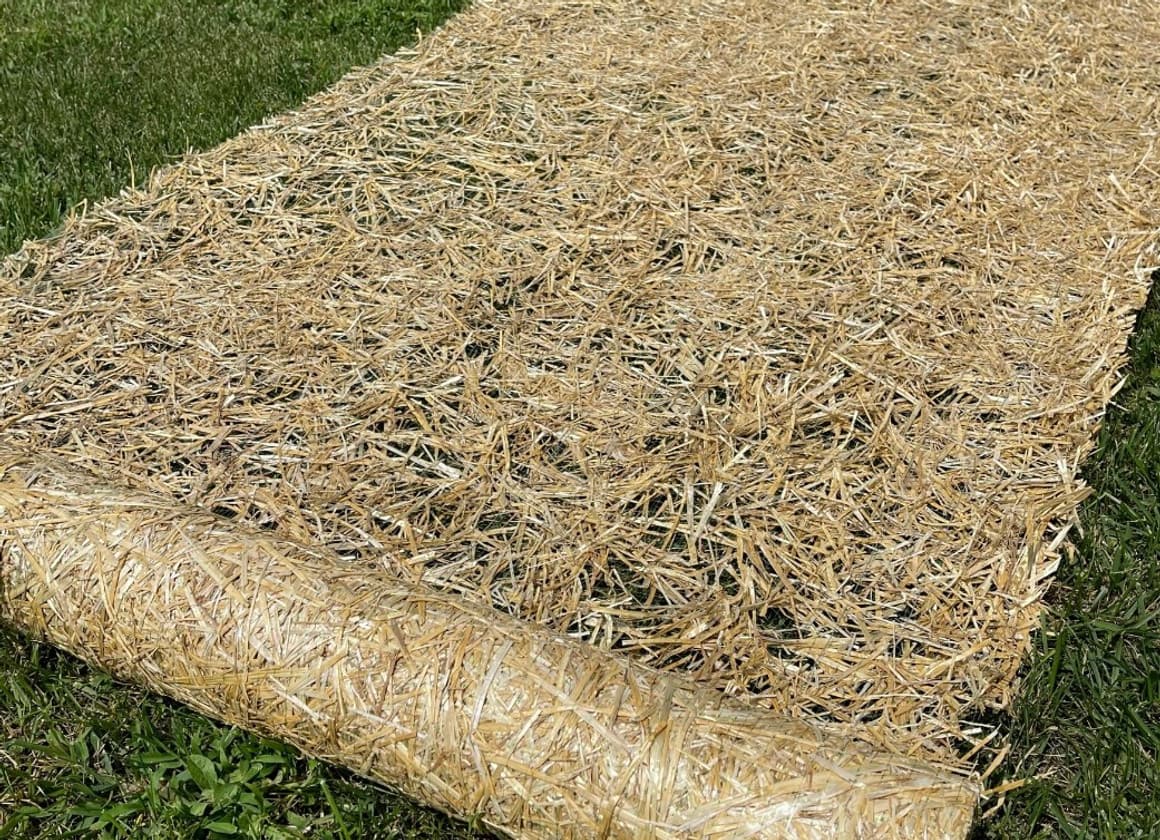
- Erosion control blankets (straw, or straw and coconut for tougher spots) are the go-to for a freshly seeded slope. They pin down over the seed, shield it from washout and impact, hold moisture, and then break down into the soil as the roots take hold. A double-net blanket holds up on steeper pitches where a single-net product would tear.
- Woven geotextile fabric is the heavier, permanent layer. It goes under stone on a drainage swale or behind a wall, where it separates soil from aggregate so the two do not mix and sink, and lets water pass while holding fines in place.
The blanket is temporary armor for a slope you intend to green up. The geotextile is structural, and it belongs anywhere stone meets soil.
Stone: armor the paths where water concentrates
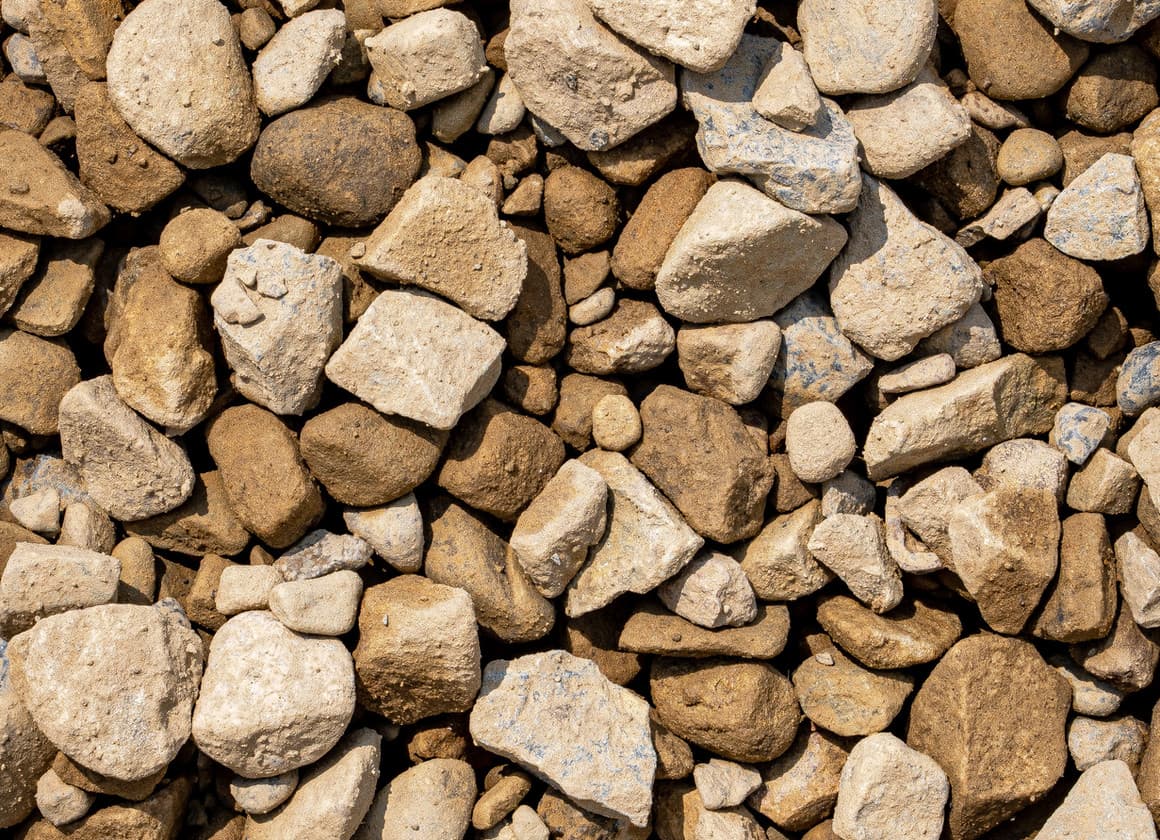
Where water moves too fast or in too much volume for plants to hold, stone takes over. A dry creek bed or a rock-lined swale gives concentrated runoff a defined, armored channel instead of letting it cut a new one. Larger, angular stone like 3B limestone resists being pushed downhill and locks together on a grade, while river rock reads more as a finished feature in a visible swale. Always set drainage stone on geotextile fabric, not bare dirt, or it works its way into the soil within a season or two. At the base of a steeper bank, a low retaining wall or a stone toe can hold the whole slope in place, which is contractor territory rather than a weekend project.
Do the coverage math for a slope
Bulk material is sold by the cubic yard, and the base formula is the same as any project: square footage times depth in feet, divided by 27. The catch on a slope is that the surface is longer than its footprint on a map. Measure the actual face of the bank along the incline, not the flat distance across it, or you will come up short.
Stone or blanket on a slope face. Say the bank runs 40 feet wide and measures 15 feet down the slope face. That is 600 square feet of surface. For a 4-inch layer of drainage stone: 600 times 0.33, divided by 27, is about 7.3 cubic yards. Round up to 8. Erosion blankets are sold by area, not volume, so for the same face you would cover 600 square feet plus a little overlap at the seams and the top. If you would rather not do the arithmetic, the bulk material calculator runs the same formula and gives you yards and tons.
Fill to rebuild a grade. Filling is rarely a uniform depth, so work from an average. A washed-out section 20 feet long and 10 feet wide that averages 8 inches deep once you account for the gully is 200 times 0.67, divided by 27, or about 5 cubic yards. Add a little for compaction, since fill loses volume as it settles and packs down. Then figure topsoil separately for the cap: that same 200 square feet at 3 inches is about 1.85 yards.
When in doubt, round up. Stopping partway up a slope to reorder means working across a seam later, and it is far easier to spread a little extra than to match a second load.
Materials hold the slope; planting keeps it held
Stone and fabric buy you time, but living roots are what hold a bank for good. The two work as a system: reshape and armor the grade with the right materials, then get deep-rooted, slope-friendly plants established through the blanket before it breaks down. For the planting side of a Pittsburgh-area slope, the crew at Dirt Works published a companion guide on the plants that do this best in our soil and climate. If your slope needs real regrading or a retaining wall at the toe before anything else happens, a design-build firm like Elements Landscape Management handles the structural side.
Bring the width and slope-face measurements of your bank and we will help you land on the right stone, fabric, and fill, and the right number of yards for each. Browse our stone, fabric, soils, and fill or contact the yard to line up a delivery.
Planning a project?
Bring your measurements and our team will help you choose the right material and quantity. Local delivery across Beaver, Allegheny, and Butler counties.